
I recently became a Team Lead at Automattic where I’ve been working for the past 4+ years. I manage a hybrid team of Quality Engineers, Code Wranglers and Developer Advocates. Together, we focus on quality and stability of WooCommerce Core platform as well as on the developer tools and experience.
My previous team was growing. There was a need for a split and for a more defined focus. My manager at a time asked me if I was interested in becoming a Team Lead and take a part of the team with me to form a new team.
The idea of new opportunities to improve the quality of WooCommerce through a dedicated effort on the team level and gaining new skills along the way sounded like an exciting challenge to me. I didn’t think long and said yes.
After receiving congratulations from my colleagues, family and friends, the very first day of being a Team Lead was fast approaching. I carefully thought about what kind of manager I wanted to be: a supportive professional, a multiplier who could guide the team to accomplish great things. However, I wasn’t sure how I was going to get there.
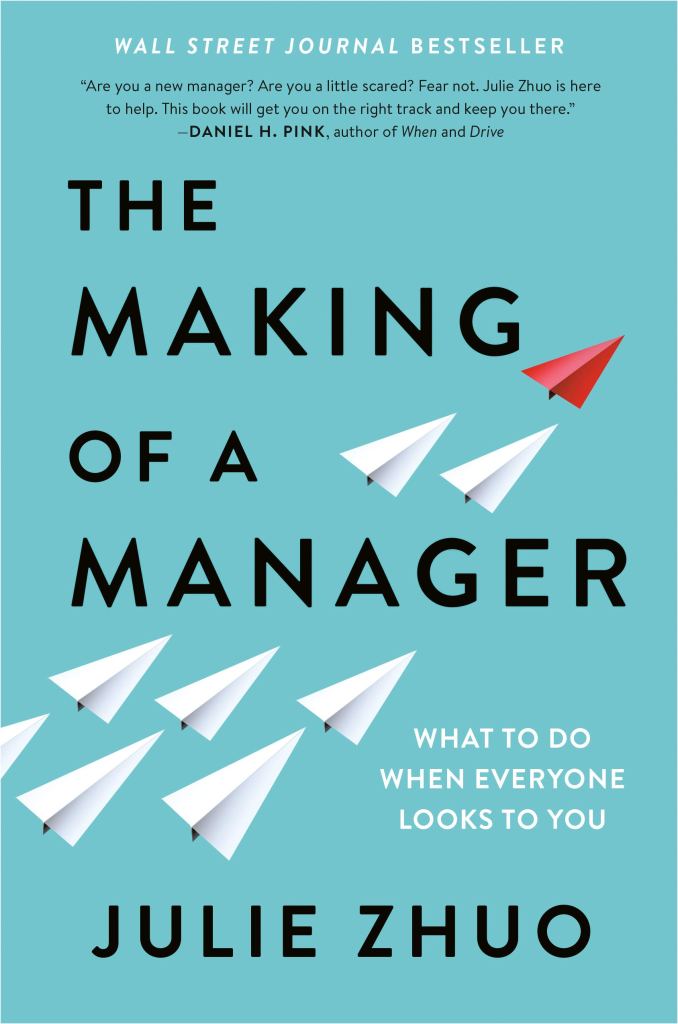
Naturally, I started to look for resources that could help me to navigate the beginning of my Team Lead journey. A good friend of mine recommended “The Making of a Manager: What to Do When Everyone Looks to You” by Julie Zhuo. Julie is a former Product Design VP at Facebook where she’s worked for 14 years. In her book, she writes about the first months of being a manager and what to do during that time.
I connected to Julie’s writing as soon as I started to read the book. I found it very relevant to the experience I was having as a new Team Lead. This post is a collection of notes I took as I was reading the book. I am hoping to use it as a guide and come back to it from time to time as I grow in my new role as a manager.
Note that the emphases in bold type in the sentences below is mine.
Intro: Great Managers are Made, Not Born
I believe this as deeply as I believe anything: Great managers are made, not born. It doesn’t matter who you are. If you care enough to be reading this, then you care enough to be a great manager.
– FROM “THE MAKING OF A MANAGER” BY JULIE ZHUO
Chapter 1: What is Management?
A MANAGER’S JOB IS TO . . . build a team that works well together, support members in reaching their career goals, and create processes to get work done smoothly and efficiently.
True, but the problem is that these answers are still an assortment of activities. If I asked you, “What is the job of a soccer player?” would you say that it’s to attend practices, pass the ball to their teammates, and attempt to score goals? No, of course not. You’d tell me why those activities matter in the first place. You’d say, “The job of a soccer player is to win games.”
This is the crux of management: It is the belief that a team of people can achieve more than a single person going it alone. It is the realization that you don’t have to do everything yourself, be the best at everything yourself, or even know how to do everything yourself. Your job, as a manager, is to get better outcomes from a group of people working together. It’s from this simple definition that everything else flows.
Through thick or thin, in spite of the hundreds of things calling for your attention every day, never forget what you’re ultimately here to do: help your team achieve great outcomes.
I’ve come to think of the multitude of tasks that fill up a manager’s day as sorting neatly into three buckets: purpose, people, and process:
- The purpose is the outcome your team is trying to accomplish, otherwise known as the why. Why do you wake up and choose to do this thing instead of the thousands of other things you could be doing? The first big part of your job as a manager is to ensure that your team knows what success looks like and cares about achieving it.
- The next important bucket that managers think about is people, otherwise known as the who. Are the members of your team set up to succeed? Do they have the right skills? Are they motivated to do great work?
- Finally, the last bucket is process, which describes how your team works together. You might have a superbly talented team with a very clear understanding of what the end goal is, but if it’s not apparent how everyone’s supposed to work together or what the team’s values are, then even simple tasks can get enormously complicated. Who should do what by when? What principles should govern decision-making?
Your role as a manager is not to do the work yourself, even if you are the best at it, because that will only take you so far. Your role is to improve the purpose, people, and process of your team to get as high a multiplier effect on your collective outcome as you can.
If you are wondering whether you can be a great manager, ask yourself these three questions:
- Do I Find It More Motivating to Achieve a Particular Outcome or to Play a Specific Role?
- Do I Like Talking with People?
- Can I Provide Stability for an Emotionally Challenging Situation?
The Difference Between Leadership and Management
Manager is a specific role, just as elementary school teacher and heart surgeon are specific roles. As we discussed a few pages ago, there are clear principles outlining what a manager does and how his success is measured. Leadership, on the other hand, is the particular skill of being able to guide and influence other people.
So to be a great manager, one must certainly be a leader.
A leader, on the other hand, doesn’t have to be a manager. Anyone can exhibit leadership, regardless of their role.
If you can pinpoint a problem and motivate others to work with you to solve it, then you’re leading.
Leadership is a quality rather than a job.
This is an important distinction because while the role of a manager can be given to someone (or taken away), leadership is not something that can be bestowed. It must be earned. People must want to follow you.
Chapter 2: Your First Three Months
No matter how you’ve arrived at your new role, congratulations are in order because this much is true: Somebody—more likely many people—believed in you and your potential to lead a team.
Your path here probably took one of the four routes below:
- Apprentice: Your manager’s team is growing, so you’ve been asked to manage a part of it going forward.
- Pioneer: You are a founding member of a new group, and you’re now responsible for its growth.
- New Boss: You’re coming in to manage an already established team, either within your existing organization or at a new one.
- Successor: Your manager has decided to leave, and you are taking his place.
The Apprentice
What to take Advantage Of
This is usually the easiest way to transition into being a manager. Because your own manager has been looking over the team and knows everyone involved, you’ll typically have more guidance than in the other transition scenarios.
If you’re transitioning as an apprentice, work with your manager on a joint plan for getting started. Questions to discuss include:
- What will be my scope to start, and how do you expect it to change over time?
- How will my transition be communicated?
- What do I need to know about the people that I’ll be managing?
- What important team goals or processes should I be aware of and help push forward?
- What does success look like in my first three and six months?
- How can the two of us stay aligned on who does what?
A useful exercise to go through at the beginning of your transition is to sit down and make a list of all the things that are awesome about the current state of the world:
- Does everyone get along?
- Are your processes efficient?
- Is your team known for rigorous and high-quality work?
Now, next to that, create a list of all the things that could be better:
- Is your team cagey about deadlines?
- Does it seem like priorities are always shifting?
- Is there that one really long weekly meeting nobody wants to attend?
These two lists give you the start of a plan for what you should and shouldn’t change. You don’t need to fix what isn’t broken, but neither should you feel like you’re stuck in a time machine of this is how it was always done. After all, that’s why you got the job! Taking the time to reflect on the biggest opportunities for improvement helps you understand how to best act as a multiplier for your team.
What to Watch Out For
- It can feel awkward to establish a new dynamic with former peers.
- Playing the role of coach: Your job now includes understanding your former peers’ career goals, what kinds of projects are well suited to their strengths and interests, what they need help with, and how they are doing relative to expectations.
- Having hard conversations: When I gave my peers feedback on their work in the past, I’d frame criticisms as suggestions—“Hey, just an idea, but have you considered . . . ?” I knew that, ultimately, they owned their own decisions. When I became my peers’ manager, I found it difficult to change this mindset even when I needed to.
- Having people treat you differently or share less information with you.
- It’s tricky to balance your individual contributor commitments with management. At the point in which your team becomes four or five people, you should have a plan for how to scale back your individual contributor responsibilities so that you can be the best manager for your people.
The Pioneer
What to take Advantage Of
- You’ve done the job, so you know what it takes.
- You were the first, the original, the alpha; no one knows better than you what the job entails because you helped define it. Now it’s time to take it to the next level.
- You get to build the team that you want.
Some questions to ask yourself in preparation:
- How do I make decisions?
- What do I consider a job well done?
- What are all the responsibilities I took care of when it was just me?
- What’s easy or hard about working in this function?
- What new processes are needed now that this team is growing?
Be deliberate about the people and culture you’re setting up, and ask yourself:
- What qualities do I want in a team member?
- What skills does our team need to complement my own?
- How should this team look and function in a year?
- How will my own role and responsibilities evolve?
What to Watch Out For
- You may not have much support.
- As a pioneer, you continually find yourself alone in new, unfamiliar terrain.
- It’s tricky to balance your IC work with management.
The New Boss
What to Take Advantage Of
- People cut you slack in the beginning.
- You start with a blank slate.
In your first few one-on-one meetings, ask your reports the following questions to understand what their “dream manager” looks like:
- What did you and your past manager discuss that was most helpful to you?
- What are the ways in which you’d like to be supported?
- How do you like to be recognized for great work?
- What kind of feedback is most useful for you?
- Imagine that you and I had an amazing relationship. What would that look like?
What to Watch Out For
- It takes a while to adjust to the norms of a new environment.
- You don’t know the job and what it takes.
- You need to invest in building new relationships.
New managers on my team tell me that the thing they most want to understand is how to calibrate their expectations around “what’s normal.” One effective way to do that is to look at specific scenarios together with your own manager. Questions to ask include:
- What does it mean to do a great job versus an average or poor job?
- Can you give me some examples?
- Can you share your impressions of how you think Project X or Meeting Y went? Why do you think that?
- I noticed that Z happened the other day. . . . Is that normal or should I be concerned?
- What keeps you up at night? Why?
- How do you determine which things to prioritize?
The Successor
What to Watch Out For
- It can feel awkward to establish a new dynamic with former peers.
- The increase in responsibility can feel overwhelming.
- You feel pressure to do things exactly like your former manager.
Your first three months as a new manager are a time of incredible transition. By the end of it, the day-to-day starts to feel familiar—you’re adapting to new routines, you’re investing in new relationships, and you may begin to have a sense of how you can best support your team.
Chapter 3: Leading a Small Team
Managing a small team is about mastering a few basic fundamentals:
- developing a healthy manager–report relationship.
- creating an environment of support.
Everything Always Goes Back to People
What leads people to do great work?
It feels like a complicated question but it really isn’t, as Andy Grove points out in his classic High Output Management. He flips the question around and asks: What gets in the way of good work? There are only two possibilities. The first is that people don’t know how to do good work. The second is that they know how, but they aren’t motivated.
Trust Is The Most Important Ingredient
You can avoid being blindsided by developing a relationship founded on trust, in which your reports feel that they can be completely honest with you because they have no doubt that you truly care about them. You’ve accomplished this if the following three statements are true:
- My reports regularly bring their biggest challenges to my attention.
- My report and I regularly give each other critical feedback and it isn’t taken personally.
- My reports would gladly work for me again.
Strive to be Human, Not a Boss
The way to earn trust with your reports is no different than how you earn it with anyone else, and requires the following few actions.
Respect and Care about Your Report
What caring does mean, however, is doing your best to help your report be successful and fulfilled in her work. It means taking the time to learn what she cares about. It means understanding that we are not separate people at work and at home—sometimes the personal blends into the professional, and that’s okay.
Invest Time to Help Your Report
One-on-ones should be focused on your report and what would help him be more successful, not on you and what you need. If you’re looking for a status update, use another channel.
The ideal 1:1 leaves your report feeling that it was useful for her. If she thinks that the conversation was pleasant but largely unmemorable, then you can do better. Remember that your job is to be a multiplier for your people. If you can remove a barrier, provide a valuable new perspective, or increase their confidence, then you’re enabling them to be more successful.
How can you achieve stellar 1:1s? The answer is preparation. It’s rare that an amazing conversation springs forth when nobody has a plan for what to talk about. I tell my reports that I want our time together to be valuable, so we should focus on what’s most important for them. Here are some ideas to get started:
- Discuss top priorities: What are the one, two, or three most critical outcomes for your report and how can you help her tackle these challenges?
- Calibrate what “great” looks like: Do you have a shared vision of what you’re working toward? Are you in sync about goals or expectations?
- Share feedback: What feedback can you give that will help your report, and what can your report tell you that will make you more effective as a manager?
- Reflect on how things are going: Once in a while, it’s useful to zoom out and talk about your report’s general state of mind:
- How is he feeling on the whole?
- What’s making him satisfied or dissatisfied?
- Have any of his goals changed?
- What has he learned recently and what does he want to learn going forward?
Every morning, I’ve gotten into the habit of scanning my calendar and compiling a list of questions for each person I’m meeting with. Why questions? Because a coach’s best tool for understanding what’s going on is to ask.
Your job as a manager isn’t to dole out advice or “save the day”—it’s to empower your report to find the answer herself.
Here are some of my favorite questions to get the conversation moving:
- Identify: These questions focus on what really matters for your report and what topics are worth spending more time on:
- What’s top of mind for you right now?
- What priorities are you thinking about this week?
- What’s the best use of our time today?
- Understand: Once you’ve identified a topic to discuss, these next questions get at the root of the problem and what can be done about it:
- What does your ideal outcome look like?
- What’s hard for you in getting to that outcome?
- What do you really care about?
- What do you think is the best course of action?
- What’s the worst-case scenario you’re worried about?
- Support: These questions zero in on how you can be of greatest service to your report:
- How can I help you?
- What can I do to make you more successful?
- What was the most useful part of our conversation today?
Be Honest and Transparent about Your Report’s Performance
Admit Your Own Mistakes and Growth Areas
People will forget what you said, people will forget what you did, but people will never forget how you made them feel, goes the popular saying.
Brené Brown, research expert in courage, shame, and empathy, begs to differ. She proposes that there is enormous power in expressing vulnerability: “Vulnerability sounds like truth and feels like courage. Truth and courage aren’t always comfortable, but they’re never weakness.”
These days, I try to admit when I don’t have the answers or when I’m working through my own personal challenges. I’ll say things like the following:
- “I don’t know the answer. What do you think?”
- “I want to come clean and apologize for what I did/said the other day. . . .”
- “One of my personal growth areas this half is . . .”
- “I’m afraid I don’t know enough to help you with that problem. Here’s someone you should talk to instead. . . .”
Help People Play To Their Strengths
Recognition for hard work, valuable skills, helpful advice, or good values can be hugely motivating if it feels genuine and specific. Furthermore, people are more likely to succeed when using their strengths.
In each case, you’re giving someone an opportunity to grow in a way that speaks to their interests and strengths. “There is one quality that sets truly great managers apart from the rest: they discover what is unique about each person and then capitalize on it,” says Buckingham, the renowned management consultant who has studied hundreds of organizations and leaders. “The job of a manager . . . is to turn one person’s particular talent into performance.”
If you have five people on your team, four of whom are doing well and one who isn’t, you may feel like you should focus most of your time and energy on the struggling report because you want to “fix” the problem. But in the same way that individuals should play to their strengths, so should you pay attention to your team’s top talent—the people who are doing well and could be doing even better. Don’t let the worst performers dominate your time—try to diagnose, address, and resolve their issues as swiftly as you can.
Good CEOs know that they should double down on the projects that are working and put more people, resources, and attention on those rather than get every single project to the point of “not failing.”
The rising stars on your team may not be clamoring for your attention, but if you help them to dream bigger and become more capable leaders, you’ll be amazed at how much more your team can do as a whole.
The One Thing You Shouldn’t Tolerate On Your Team
There is a certain archetype of the brilliant lone wolf who, though he regularly puts others down, manages to come out the hero because he is simply heads and tails more capable than anyone else.
Instead of a multiplier effect, you get a divider effect: the presence of this person makes the rest of your team less effective.
With the benefit of hindsight, it’s easy to recognize the aura of toxicity that this person created. But as an inexperienced manager, I didn’t always see it clearly. He does a lot of impressive work, I thought to myself. What I later realized is that the team actually becomes better off when brilliant assholes leave. Yes, you lose out on their individual contributions, but the fog lifts for everyone else. They can let their guard down. Collaboration becomes more honest and productive, so the work of the team as a whole improves.
You Don’t Always Have To Make It Work
Call it what you want—fit, motivation, chemistry—but the things a person cares about must also be what the team (and company) cares about. If not, then that person might find themselves in frequent misalignment with what they want for their own career.
Make People Moves Quickly
At the end of the day, if you don’t believe someone is set up to succeed in his current role, the kindest thing you can do is to be honest with him and support him in moving on.

Leave a comment